


What is AIRC?
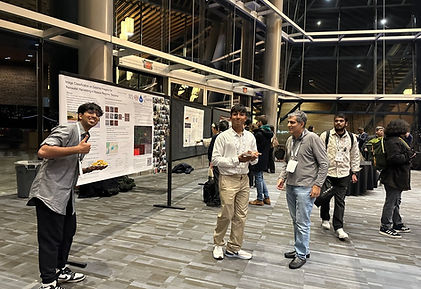
AIRC (AI Research & Competition) is a structured pathway in collaboration with Ryquo Lab, to help students build the foundations for modern AI research.
Students learn to ask meaningful questions, work with data and models, design experiments, evaluate results, and communicate technical work clearly.
NeurIPS 2024 High School Competition Spotlight
Building Independent AI Researchers
AIRC is designed not simply to teach students how to use AI tools or complete coding projects. Our goal is to help students develop the ability to ask questions, investigate ideas, design experiments, evaluate evidence, and build independently.
Through AIRC 101 and 201, students build the research thinking and technical foundations needed to begin pursuing independent AI research.
Research Question → Literature → Data & Models → Experiment → Evaluation → Communication

AIRC 001 is designed specifically for middle school students in Grades 7-10 who want to go beyond using AI — and understand how it actually works. No prior coding or AI experience needed. AIRC 001 is not a coding class. The focus is on understanding AI — why it works, what its limits are, and how researchers use it to solve real problems. Students explore machine learning, natural language processing, and computer vision at a conceptual level, then apply that understanding to build a small group AI-powered app using MIT App Inventor. The final product is not just an app — it's a project with a research abstract, presented in competition format. That combination is what sets 001 apart from typical AI camps.
Course Design
What happens over 10 weeks
Every session is live, interactive, and built around real AI concepts — not slides and quizzes.

How Students Grow Through AIRC
From learning AI concepts to building research thinking, technical depth, and meaningful work.
Research Thinking
• Formulate research questions and hypotheses
• Read, critique, and build on papers
• Design experiments and evaluate results
Technical Execution
• Work with real datasets and AI models
• Turn ideas into structured technical work
• Present research clearly and professionally
Research Outcomes That Go Beyond the Classroom
Students in AIRC do not stop at tutorials or small projects. They develop work that reflects real research thinking, technical depth, and exploration.
Examples of outcomes include:
-
Research-based AI / AI+ X projects
-
Competition-ready technical work
-
Papers and publication-oriented writing
-
Stronger portfolios for future academic pathways
Selected Student Work:
From real-world problem solving to academic research and competition-level work.
OptiPath Buses: An AI-Powered Microtransit System for Equitable Urban Mobility in New York City
A. Liu, R. Liu, J. Li
OptiPath is an AI-powered system built to improve urban transit efficiency and accessibility in New York City using real-world data.

Details are partially withheld due to ongoing competition submission.
📄 Accepted to ICLR Workshop 2026 (top-tier AI conference)
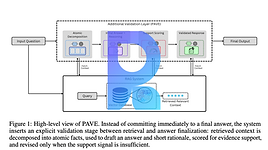
PAVE improves the reliability of retrieval-augmented LLMs by verifying whether answers are truly supported by evidence before final output.
Structured Reasoning for Fairness: A Multi-Agent Approach to Bias Detection in Textual Data
T. Huang, E. Fan
We introduce a multi-agent framework for bias detection in text, improving both accuracy and interpretability in LLM-based systems. The approach achieved 84.9% accuracy on the WikiNPOV dataset.

🏆 AAAI Workshop 2025 (top tier AI conference)— Spotlight Oral
⭐ Selected for oral presentation
Springer Nature
arXiv preprint
These projects reflect a clear progression — from solving real-world problems to contributing to academic research and top-tier AI conference pathways.
Meet the AIRC Instructors
Learn from researchers and engineers working at the frontier of modern AI systems and research.

Research experience at MIT CSAIL and industry experience at Cleanlab, focused on trustworthy and modern AI systems. Contributed to work published at NeurIPS, ICLR, and AAAI, and has mentored students whose research was accepted to top workshops and IEEE venues.

Graduate student at CMU LTI, focusing on machine learning and multi-agent systems, with research published at NeurIPS, ICLR. Brings real-world ML engineering experience from Amazon and extensive experience mentoring students in AI and research projects.

